Equality, Diversity and inclusion in enviromental science (2023 - 2025)
Part 1: Improving university policies and risk assessment to support inclusive fieldwork in environmental sciences
Fieldwork has inherent risks, though often risk managers and institutional policy focus on objective physical risks (like falling into a river or animal bites) but there is little attention played to non-physical risks. Non-physical risks include discrimination, bullying, uneven fieldwork team power dynamics, racism and ableism. It is unknown how higher education institutional policy may protect or not protect fieldworks from these non-physical risks and where the responsibility rest for the fieldworker. In this project we aim to understand how equality, diversity and inclusion is incorporated into institutional policy and risk assessment in environmental science.
Using a systematic review of 90 higher education institutions field work safety and risk assessment policy we found:
- 77 % of policy documents mentioned a protected characteristics but only 40 % stated that fieldworkers have a right to safety in the field
- Just 5 % of policy documents stated a right to participate in fieldwork free from harassment and only 10% identified discrimination as a potential risk.
We’ve demonstrated there is a need to develop more inclusive fieldwork policies across UK higher education institutions. We made several recommendations: (i) strive for a philosophical and cultural change to make inclusion the default; (ii) develop institute- and fieldwork-specific policy and risk assessment documents; (iii) ensure that policies and risk assessments explicitly consider how characteristics and identities intersect with risk in the field; (iv) improve incident reporting procedures; (v) clearly articulate responsibilities; and (vi) use inclusive language that values fieldworkers and embeds their rights to safety.
Open access paper can be found here
Funded through Newcastle University Enhancing Research Culture Fund
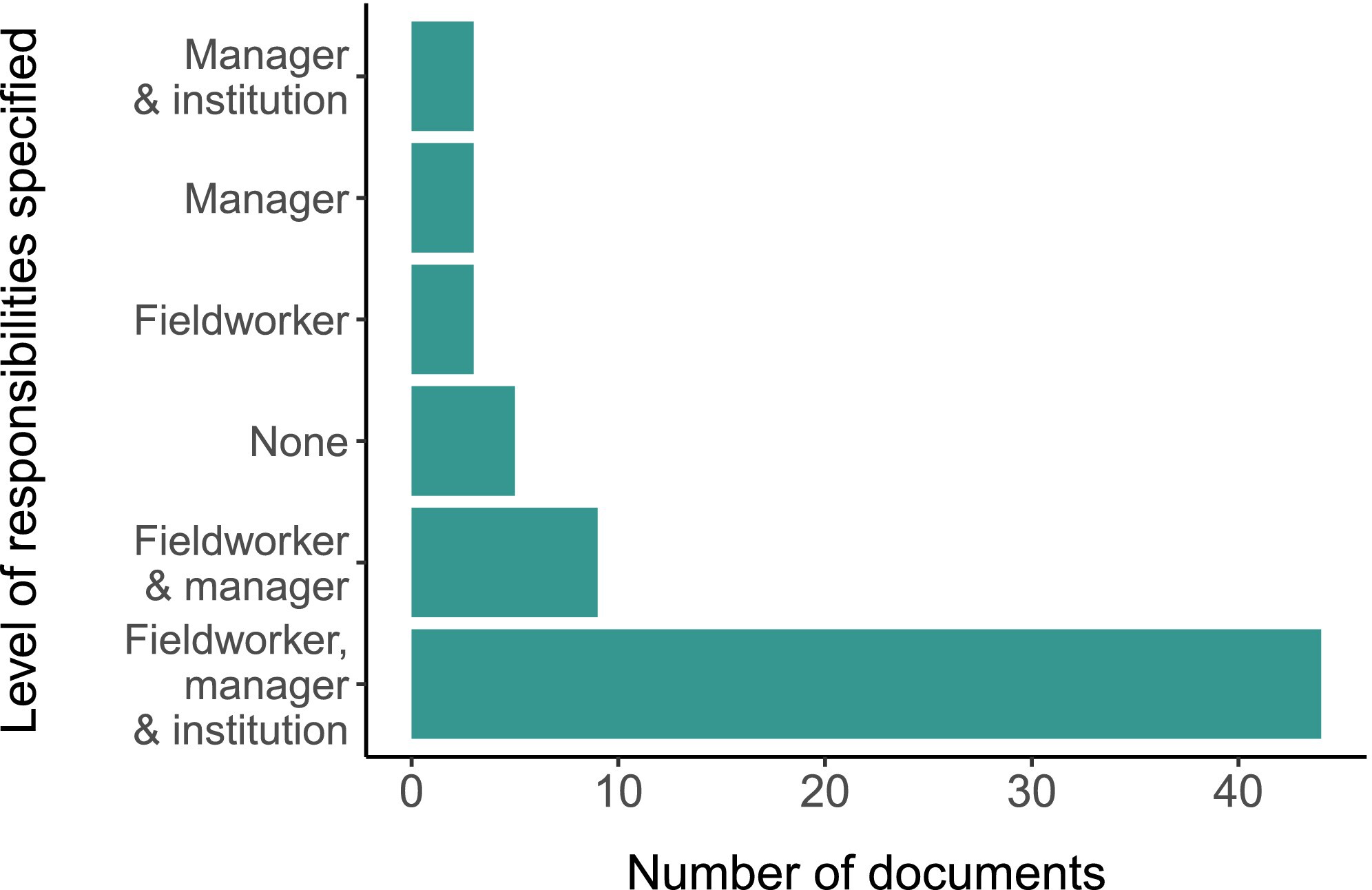
Part 2: Exploring understanding and experience of responsibilities for marginalised fieldworkers’ safety and wellbeing with recommendations for more inclusive approaches
In the second part of this project, led by collaborators in the faculty of medical sciences we conducted a deep examination of just an anonymised single higher education institution using document analysis, network analysis and focus groups.
Updates will be posted once accepted paper is in press.