Water of Dye: landscape scale river restoration
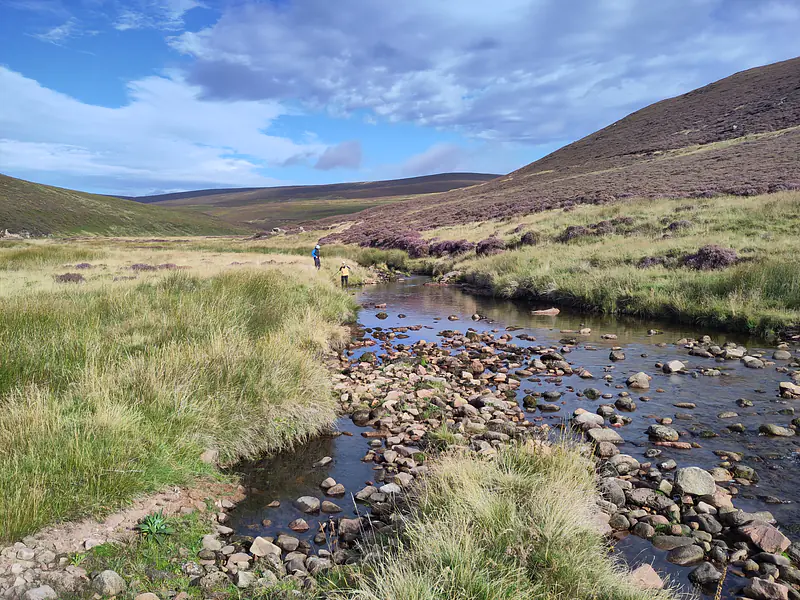
Rivers, globally, are amongst our most threatened ecosystems with freshwater biodiversity declining faster than any other biome. Efforts to reverse this decline have accelerated, however we need more evidence-led restoration design to work with natural processes to deliver multiple benefits from improve riparian and in-channel habitat quality to downstream flood mitigation.
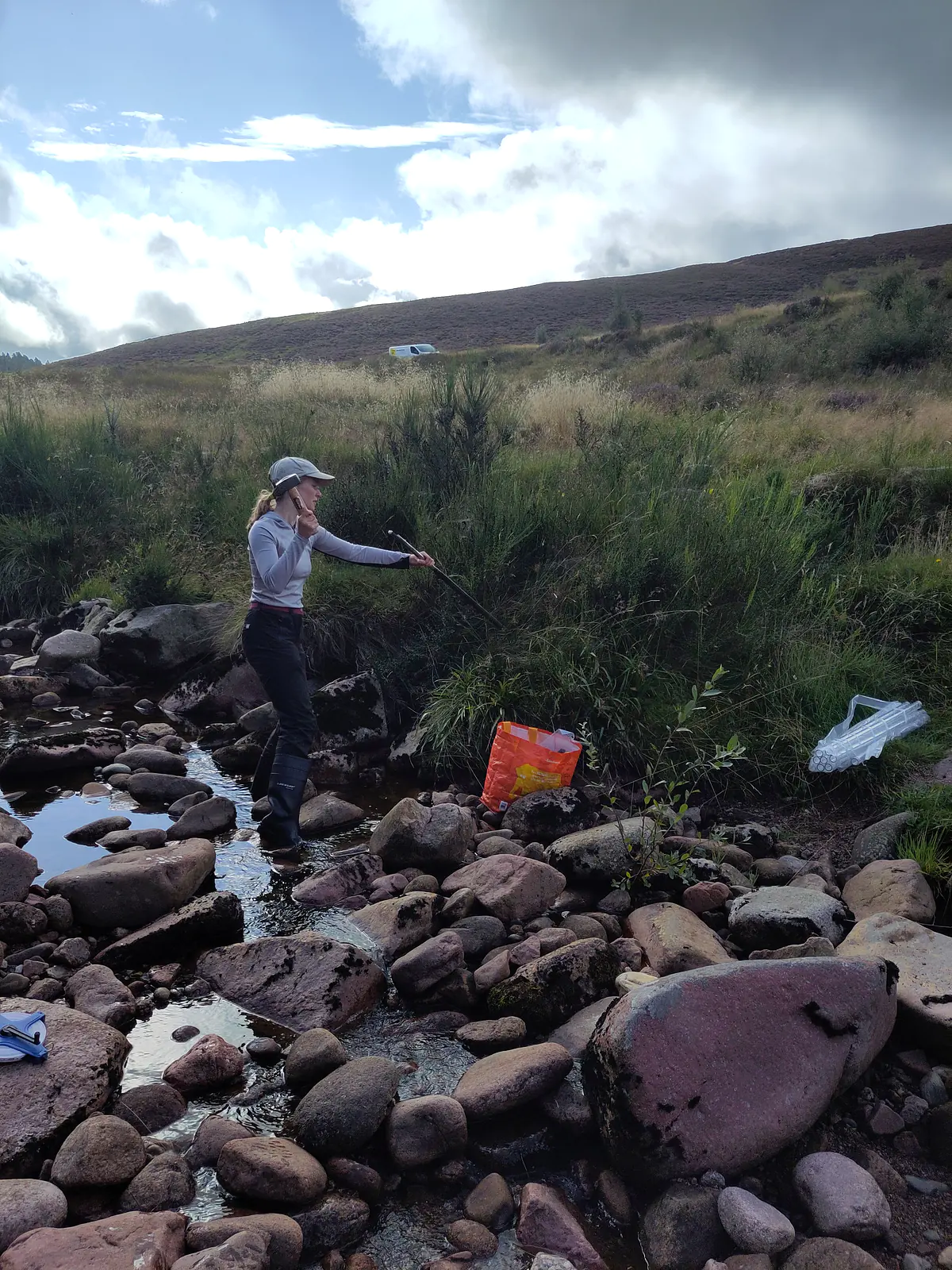
Working in the Water of Dye as part of a multi-stakeholder project (Glen Dye Moor Partnership, University of Stirling, Scottish Woodlands, River Dee Trust), an upland degraded catchment in NE Scotland, we seek to understand how different restoration actions, including mobile woody debris installation, wetland creation, peatland restoration, and riparian tree planting, combine to influence geomorphology, hydrology, and biodiversity. The project aims to identify when interventions work best alone or in combination, and how they can be deployed strategically to maximise ecosystem and societal benefits.
Our work within this project is to:
- Understand how the fluvial geomorphology responds to targeted restoration interventions using a range of different techniques including structure from motion, Digital Elevation Model analysis and landscape evolution modeling
- Quantify and understand how sediment transport changes with restoration interventions using continuous time series analysis
- Evaluate changes in ecohydrological response at landscape scale in respect to variable species richness, diversity and community structure
Funded by the Glen Dye Moor partnership (Aviva Investors), managed by PXN Group Ltd in collaboration with Scottish Woodlands.